You’ve got a pile ready to go, but not everything on it belongs on our truck. A handful of materials are genuinely off-limits for junk removal crews anywhere in San Diego County, and it’s worth knowing which ones before we show up.
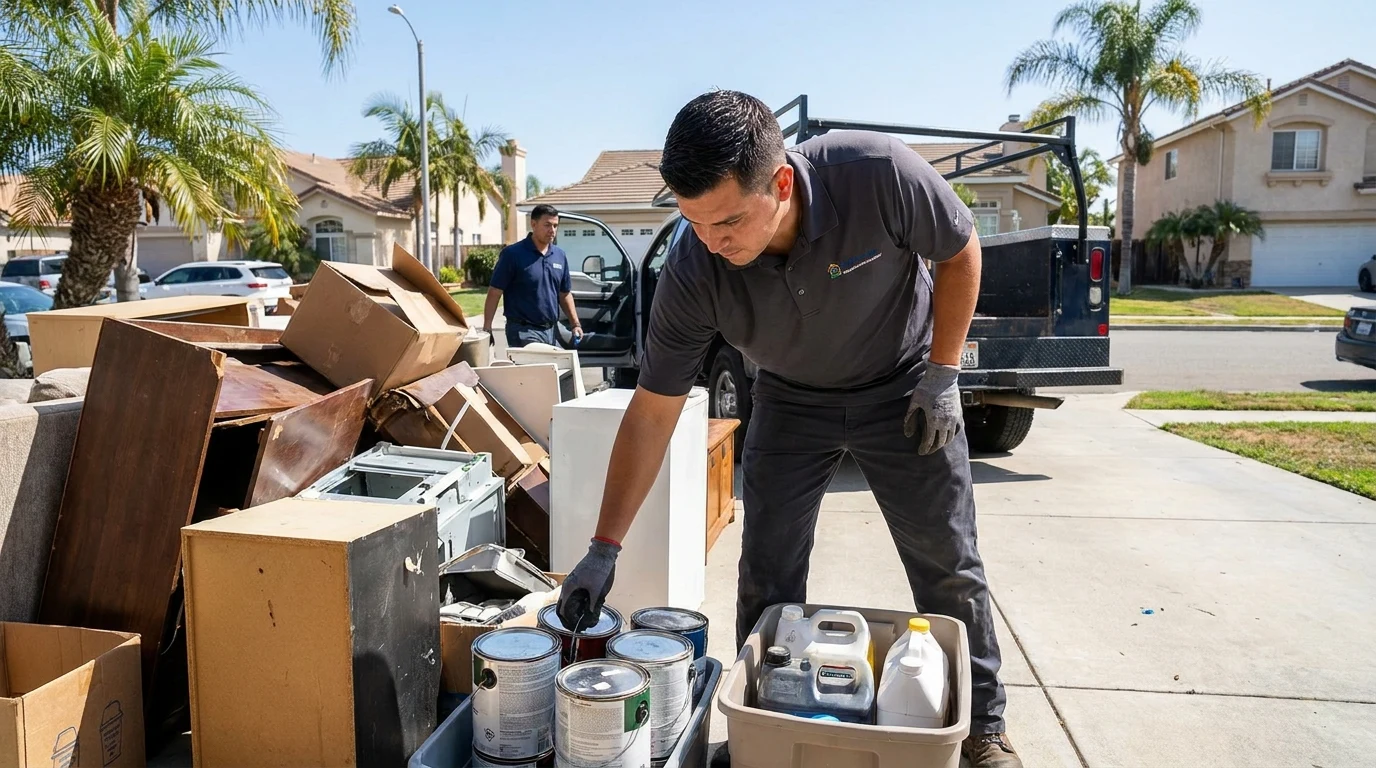
Hazardous waste and why it’s off-limits
The short version: hazardous waste can’t go into a regular landfill or transfer station. California law prohibits it, and the facilities that accept general junk aren’t equipped to handle materials that can leak, ignite, or contaminate groundwater.
What qualifies as hazardous? Anything labeled flammable, corrosive, toxic, or reactive. That covers a wide range of stuff that accumulates in garages, sheds, and utility closets over the years. If a product has a warning label telling you not to pour it down the drain or toss it in the trash, it’s likely in this category.
Junk removal crews are general haulers, not licensed hazardous-waste transporters. Loading those materials onto the same truck as your old sofa and drywall scraps would put the crew in violation of California regulations and expose your property to liability if something leaked in transit.
The good news: San Diego County runs a Household Hazardous Waste (HHW) program specifically for this. You can drop off materials for free at permanent collection sites, or look for periodic collection events in your neighborhood. The City of San Diego Environmental Services has the current schedule and addresses.
Paint, chemicals, and motor oil
These three come up constantly because they’re in almost every garage cleanout we do.
Latex paint is the most common source of confusion. If it’s fully dried out (you can poke it with a stick and it’s solid), most counties will accept it in regular trash. But liquid latex paint can’t go in a landfill in California. The fix is easy: leave the lid off, let it dry completely, then bag and toss it. Alternatively, take it to an HHW facility.
Oil-based paint is a different story. It’s flammable and always classified as hazardous, regardless of how dry it seems. It has to go to an HHW drop-off. So do stains, varnishes, wood preservatives, and deck sealers.
Motor oil, transmission fluid, and brake fluid are universal waste under California law. The good news here is that AutoZone, Napa, and O’Reilly locations across San Diego accept used motor oil for recycling at no charge. If you’ve got old filters or oil containers, those go to HHW.
Pesticides, herbicides, and pool chemicals round out the list. Anything you’d use to kill bugs, weeds, or algae is regulated. Pool shock, chlorine tablets, and algaecide concentrates fall here too.
If you’re scheduling a full-service junk removal job and you have any of these materials, set them aside in a separate spot before the crew arrives. We’ll take everything else.
Asbestos and the special-handling rule
Asbestos gets its own section because it’s uniquely regulated and uniquely dangerous.
Homes built before 1980 in San Diego commonly contain asbestos in floor tiles (especially the 9x9 inch vinyl kind), popcorn ceilings, pipe insulation, and certain drywall compounds. If you’re doing a remodel, demolition, or estate cleanout in an older home, there’s a real possibility you’ll encounter it.
Asbestos isn’t a material a junk removal crew can haul. The removal, bagging, transport, and disposal of asbestos-containing materials requires a licensed abatement contractor certified in California. This isn’t a formality. Disturbing asbestos incorrectly releases fibers that can cause serious lung disease years after exposure.
If you suspect asbestos: don’t disturb the material, don’t try to remove it yourself, and don’t ask a junk removal crew to take it. You need a California-certified abatement contractor to test first and handle removal if it’s confirmed. The CalRecycle site has resources on regulated waste disposal, and your county building department can point you toward certified contractors.
The same goes for lead-based paint in disturbed condition and vermiculite insulation (often sold under the Zonolite brand before 1990). Both require professional handling before any debris removal can happen.
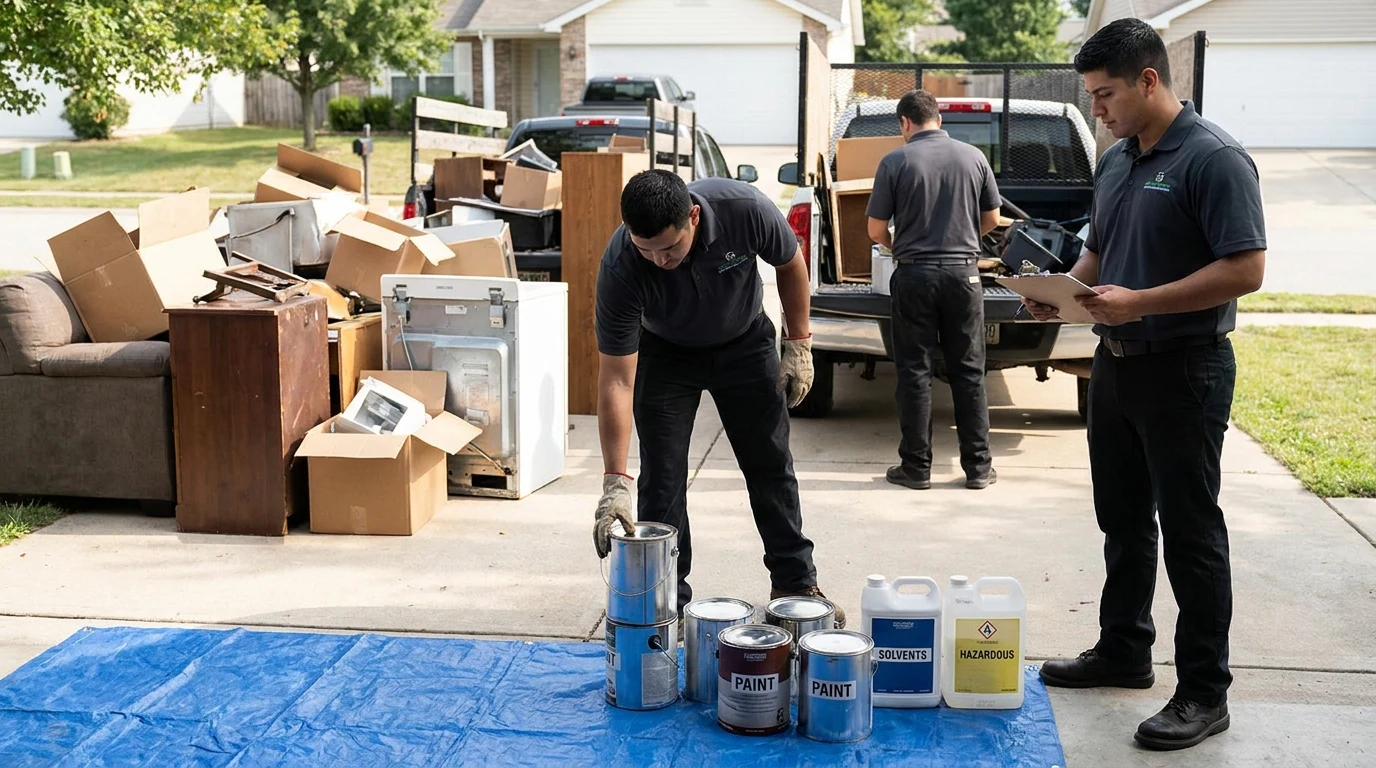
Where to take what we can’t haul
Knowing the restriction is one thing. Knowing where the stuff actually goes is what saves you the headache.
Household Hazardous Waste Program. San Diego County operates free HHW collection at several permanent locations and occasional mobile events. You can drop off paint, pesticides, solvents, motor oil, batteries, and fluorescent bulbs. No charge for residents. Visit the City of San Diego Environmental Services page for locations, hours, and accepted items. Unincorporated areas use county HHW facilities.
Electronics and e-waste. California’s e-waste recycling program (covered by the recycling fee you paid when you bought the device) means most electronics have free drop-off points across the county. Best Buy, Staples, and dedicated e-waste facilities all accept TVs, computers, and phones.
Appliances with refrigerant. Refrigerators, freezers, window AC units, and dehumidifiers contain refrigerants regulated under EPA Section 608. You can’t cut or crush them before refrigerant is recovered by a certified technician. Our appliance removal service handles proper refrigerant recovery before disposal, so this is something we actually do take care of. You don’t need to arrange this separately when you book with us.
Mattresses. California requires mattresses to go to a certified recycler, not a landfill. The Bye Bye Mattress program lists drop-off sites and participating haulers statewide. We handle mattresses through compliant channels, so this one isn’t a restriction for us, but it’s useful to know if you’re handling one on your own.
Tires. Auto shops and tire retailers typically accept used tires for a small fee. Landfills in San Diego won’t take them loose. CalRecycle maintains a list of certified tire waste haulers if you need volume disposal.
Propane tanks. Small (1 lb) camping cylinders can go to HHW. Full or partially full 20-lb grill tanks need to be exchanged at hardware stores or taken to a propane supplier for safe disposal.
What we will take that surprises people
A lot of homeowners assume restrictions apply to more materials than they actually do. Here’s what we take that often surprises people:
Appliances (with refrigerant handled properly, as noted). Washers, dryers, dishwashers, water heaters, microwaves, and refrigerators are all fair game for our appliance removal team. We take them whole, haul them to certified recyclers, and handle the refrigerant piece.
Old medications. This one’s genuinely complicated. We don’t take pharmaceuticals, but they don’t go in your trash either. CVS, Walgreens, and many police department lobbies across San Diego County have take-back kiosks that accept expired or unused medications for safe disposal. That’s the right path.
Construction debris. Drywall, lumber, tiles, and concrete from a remodel can absolutely go on our truck. Our construction debris removal service handles the bulk and heavy stuff that comes out of renovation projects.
Heavy furniture. Sofas, beds, desks, dressers, filing cabinets, and office chairs. We take it all, and we carry it out, so you don’t have to move it to the curb first.
E-waste (for pickup convenience). While there are free drop-off options across the county, sometimes you just want it gone from your house in one trip. We accept computers, monitors, and smaller electronics as part of a larger load. If it’s a full e-waste purge, we can handle that too. Check our guide on appliance removal in San Diego for more on the electronics side.
Mattresses. As mentioned, we handle these through compliant recycling channels.
Yard waste, green debris, and dirt. Branches, brush, palm fronds, bagged clippings, and clean fill dirt are all within scope. See the limitations on contaminated soil: if it’s been treated with herbicides or had a fuel spill, it needs to be assessed separately.
When to call us
If you’ve got a mix of regular junk and a few questionable items, call before you load anything. We’ll tell you exactly what we can take and help you figure out the fastest path for the rest. Call us at (858) 925-5546 for a same-day estimate.