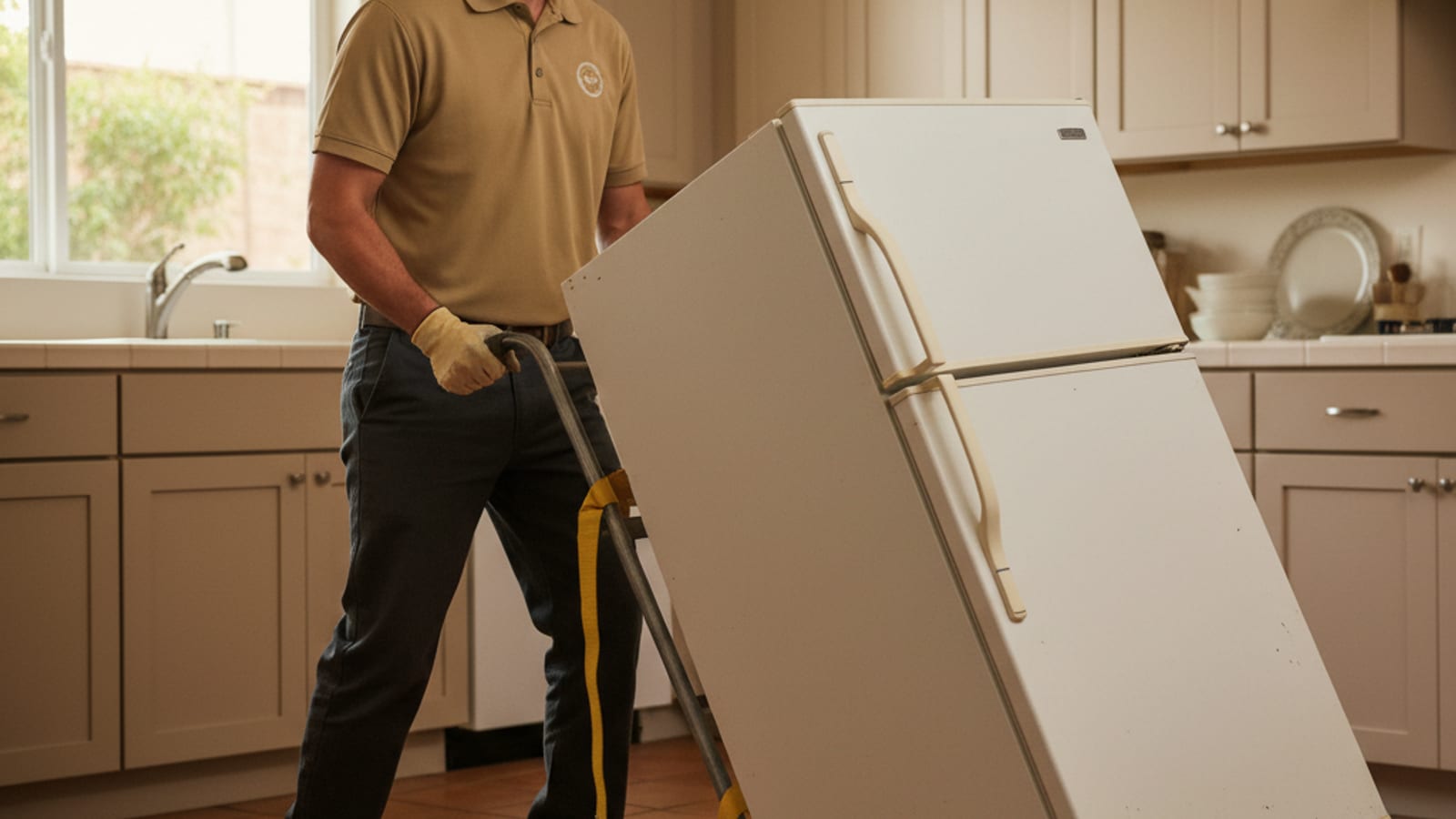
Appliance removal in San Diego runs about $129 to $199 for a single item, hauled and recycled, often same day. The price depends mostly on size and whether the unit holds refrigerant, like a fridge or AC. Below is what you’ll actually pay, the freon and disposal rules specific to San Diego County, and when it’s worth paying a hauler instead of hauling it yourself.
What appliance removal costs in San Diego
Pricing here is volume-based, not hourly. A single appliance fills a small fraction of the truck, so it sits at the low end. Refrigerant units cost more because they carry a real disposal fee at the recycler.
| Appliance | Typical price | Why |
|---|---|---|
| Microwave, small AC, dehumidifier | $129–$149 | Small, light, easy to recycle |
| Washer, dryer, dishwasher | $139–$179 | Mid-size, metal-heavy, recyclable |
| Stove, oven, range | $149–$179 | Heavy, sometimes gas disconnect needed |
| Refrigerator, freezer, full AC unit | $169–$219 | Holds freon, certified recovery fee |
| Two or more appliances together | $199–$349 | Volume discount vs. single pickups |
Removing two or three appliances at once almost always beats paying per item. If you’re already clearing a kitchen or garage, bundle it. For the full county pricing picture across every load size, see our San Diego junk removal cost guide.
The freon rule nobody tells you about
Fridges, freezers, window AC units, and dehumidifiers contain refrigerant. Federal law, EPA Section 608, makes it illegal to release that refrigerant into the air. Before the metal can be recycled, a certified technician has to recover the freon and document it.
This is why you can’t just drop a fridge at the curb or toss it in a dumpster. It’s also why refrigerant appliances cost more to remove. The recovery step is real work with a real fee behind it.
When we haul a fridge or AC, it goes to a recycler that recovers the refrigerant properly and files the paperwork. You don’t touch any of it. If a hauler quotes you the same price for a microwave and a fridge, ask where the fridge is going. That’s a sign the freon step is getting skipped.
San Diego disposal rules and Miramar Landfill
The Miramar Landfill, run by the City of San Diego, is where a lot of local waste ends up. It does take appliances, but with conditions and fees that catch people off guard.
Refrigerant units must have proof the freon was already recovered, or Miramar won’t take them. Self-haul loads get charged by weight at the scale, with a minimum fee even for a small load. By the time you rent a truck, pay the gate fee, and burn a Saturday morning, a single appliance you tried to dump yourself can cost more than a hauler who does it for a flat rate.
Most cities in the county, including Chula Vista, El Cajon, Oceanside, and Escondido, run their own bulky-item programs through their trash halers. These usually allow a set number of large items per year, often two to four pickups, scheduled days or weeks out. That’s fine if you can wait. It’s not fine if you’ve got a closing date or a tenant moving in Friday.
Mattress recycling and CalRecycle
If your appliance haul also includes a mattress, California’s CalRecycle program changes the math. Under the state’s mattress recycling law, mattresses and box springs are recycled, not landfilled, and there’s a recycling fee built into the system.
You can drop a mattress at a participating CalRecycle site for free in many cases, but you have to get it there. When we pick up a mattress alongside appliances, it’s routed to a recycler that strips it for steel, foam, and fiber. We handle mattress removal as its own line, so it doesn’t get lumped into a fridge fee. If a mattress is your main item, our junk removal cost guide breaks down those numbers too.
Where your old appliance actually goes
Working appliances and scrap appliances take different paths.
If a washer, dryer, or fridge still runs, the better move is donation. Habitat for Humanity ReStores in San Diego County and similar charities accept working large appliances, and you may get a tax-deductible receipt. We can route a working unit to donation instead of recycling when you ask. For the full list of who takes what, see our San Diego donation pickup guide.
If it’s dead, it goes to a metal recycler. Appliances are mostly steel, so recycling rates are high. Refrigerant gets recovered first, hazardous components like capacitors get pulled, and the rest is shredded for scrap.
When to DIY versus hire it out
Hauling an appliance yourself can make sense. It also goes wrong more often than people expect.
A washer or dryer on a ground floor, with a friend and a pickup truck, is doable. A fridge down a flight of stairs, or a gas range that needs the line capped, usually isn’t worth the risk to your back or your floors. Refrigerant units add the freon problem on top, since most self-haul drop-offs require proof of recovery you don’t have.
Here’s a simple way to decide:
- One light appliance, ground floor, you own a truck: DIY is reasonable.
- A fridge, freezer, or AC with refrigerant: hire it out, the freon rule makes DIY a hassle.
- Stairs, tight side yards, or HOA-restricted access: hire it out.
- Two or more appliances at once: hire it out, the bundle price wins.
HOA and bulky-item limits to watch
Condos and HOAs across San Diego County, from Carmel Valley to Carlsbad, often have rules about how and when large items leave the property. Some ban appliances at the shared trash enclosure entirely. Others require a scheduled bulky-item pickup with advance notice, and a few fine residents for leaving a fridge by the dumpster.
If you’re in a managed community, check your CC&Rs before the appliance goes anywhere. A scheduled junk-removal pickup that loads straight from your unit avoids the violation notice, and it’s faster than waiting for the HOA’s quarterly bulky day.
Same-day appliance removal across the county
We cover all of San Diego County, from the coast to the inland valleys, and same-day pickup is usually available if you call early enough. You get an upfront quote before we lift anything, no hidden gate fees, no weight surprises. We pull the appliance from wherever it sits, indoors or out, and route it to donation or recycling.
To get a flat quote or book a same-day pickup, call (858) 925-5546, or read more on our appliance removal service page.
Frequently asked questions
How much does it cost to remove a refrigerator in San Diego?
A single refrigerator typically runs $169 to $219, hauled and recycled. The higher price covers certified refrigerant recovery, which federal law requires before the metal can be scrapped.
Can I just leave an old appliance at the curb?
No. San Diego trash service won’t take large appliances at the curb on a normal pickup, and refrigerant units are illegal to dump without proof the freon was recovered. Use a scheduled bulky-item program or a hauler.
Do you remove appliances that still work?
Yes, and if it still runs we can route it to donation instead of recycling. Working washers, dryers, and fridges are welcome at Habitat ReStores and other county charities, which may give you a tax receipt.
Why does a fridge cost more to remove than a washer?
Refrigerators hold freon. A certified technician has to recover that refrigerant before recycling, under EPA Section 608. That extra step carries a real fee, which is why fridges, freezers, and AC units cost more than dry appliances.
Can you do same-day appliance pickup in San Diego?
Usually, yes. Same-day service is available across San Diego County when you call early in the day. Call (858) 925-5546 for current availability and an upfront quote.
What happens to my appliance after you take it?
Working units go to donation. Dead ones go to a metal recycler, where refrigerant is recovered, hazardous parts are removed, and the steel is shredded for scrap. Almost nothing ends up in the landfill.