Getting rid of an old refrigerator in San Diego is not as simple as rolling it to the curb. There are federal rules, local restrictions, and a few surprisingly good programs that can save you money if you know where to look.
Why fridges can’t go to the curb
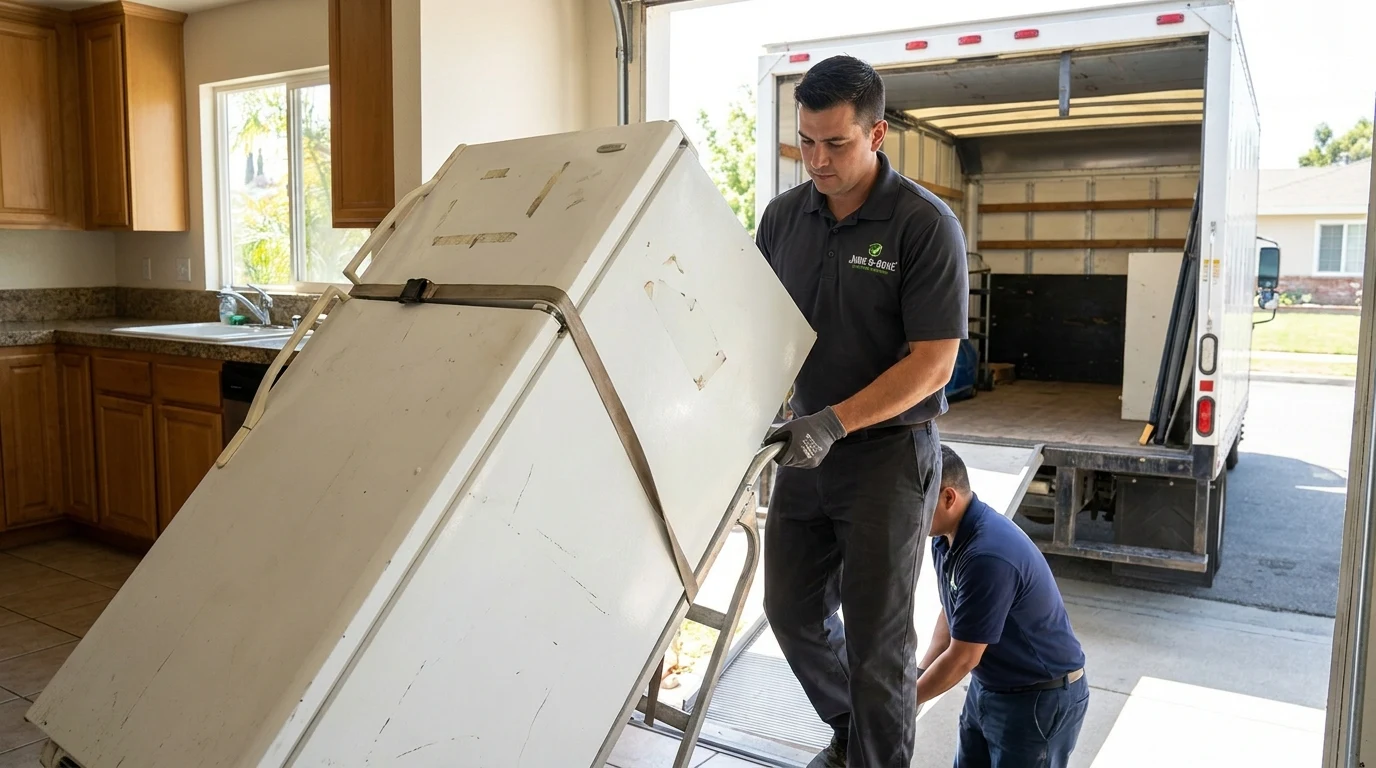
San Diego’s curbside bulky-item program accepts a lot of large items, but refrigerators are not on the list. The City of San Diego Environmental Services specifically excludes appliances that contain refrigerants from standard bulky pickup. The reason is the coolant inside.
Older refrigerators and freezers contain chlorofluorocarbons (CFCs) or hydrochlorofluorocarbons (HCFCs). Newer units use hydrofluorocarbons (HFCs). All of them are regulated. If a fridge is tipped, crushed, or left in the sun, the refrigerant can vent and contribute to ozone depletion or atmospheric warming. That’s why the city doesn’t just toss them in the back of a trash truck.
Beyond the coolant, refrigerators contain compressor oil, a small amount of insulating foam, and heavy metal components. Landfills that accept them require the refrigerant to be recovered first by a certified technician. That adds a step and a cost that a standard curbside crew isn’t set up to handle.
You can confirm the current rules directly with the City of San Diego Environmental Services. Their site lists what’s accepted for bulky pickup and what requires special handling.
If you’re dealing with other old appliances at the same time, our appliance removal service covers the full range, not just fridges. And our deeper guide to appliance removal in San Diego covers the common scenarios most homeowners run into.
The refrigerant law you need to know
The federal rule governing refrigerant recovery is EPA Section 608. It requires that any appliance containing refrigerant be serviced or disposed of by a certified technician who recovers the refrigerant before scrapping. This applies to appliances as small as a window AC unit and as large as a commercial walk-in cooler.
Practically, that means you can’t legally take a fridge to a metal recycler or dump it unless the refrigerant has been removed and recovered first. The recycler themselves may handle this if they’re equipped for it, but many smaller scrap yards are not certified and will turn you away.
Companies that haul appliances for a living, including us, work with EPA Section 608 certified refrigerant recovery technicians to handle this step. When you book a fridge pickup, that recovery is part of the job. You don’t need to arrange it separately.
This is the biggest reason DIY fridge disposal in San Diego is harder than it looks. A neighbor with a truck can haul your old sofa. They can’t legally haul your old fridge without certification. Most people don’t find this out until they’re already stuck.
SDG&E’s recycling rebate for working units
If your refrigerator or freezer still runs, you may qualify for a cash rebate through SDG&E’s appliance recycling program. The program is designed to get energy-hungry older units off the grid. Older refrigerators from the 1990s and early 2000s can use two to three times the electricity of a current-model unit. Getting them out of garages and second kitchens is a priority for the utility.
The rebate amount changes periodically, so check directly with SDG&E for the current figure. The process typically works like this: you schedule a pickup through their appliance recycling partner, they send a truck, recover the refrigerant, haul the unit, and a rebate check arrives by mail in a few weeks.
There are conditions. The unit usually needs to be in working order, plugged in, and within certain size limits. A fridge that’s been unplugged in the garage for a year may or may not qualify depending on whether it still runs. It’s worth calling to ask before assuming.
The rebate program won’t take every fridge, and it doesn’t handle freezers in all cases. If your unit doesn’t qualify, or you just need it gone faster than their scheduling allows, a private crew is a reliable alternative.
What disposal actually costs
Fridge disposal costs more than most appliance pickups because of the refrigerant recovery step. Here’s what to expect across your main options.
The SDG&E rebate program is free if your unit qualifies, and you get money back. That’s the best deal available for a working unit. The tradeoff is scheduling lead time, which can be a week or more.
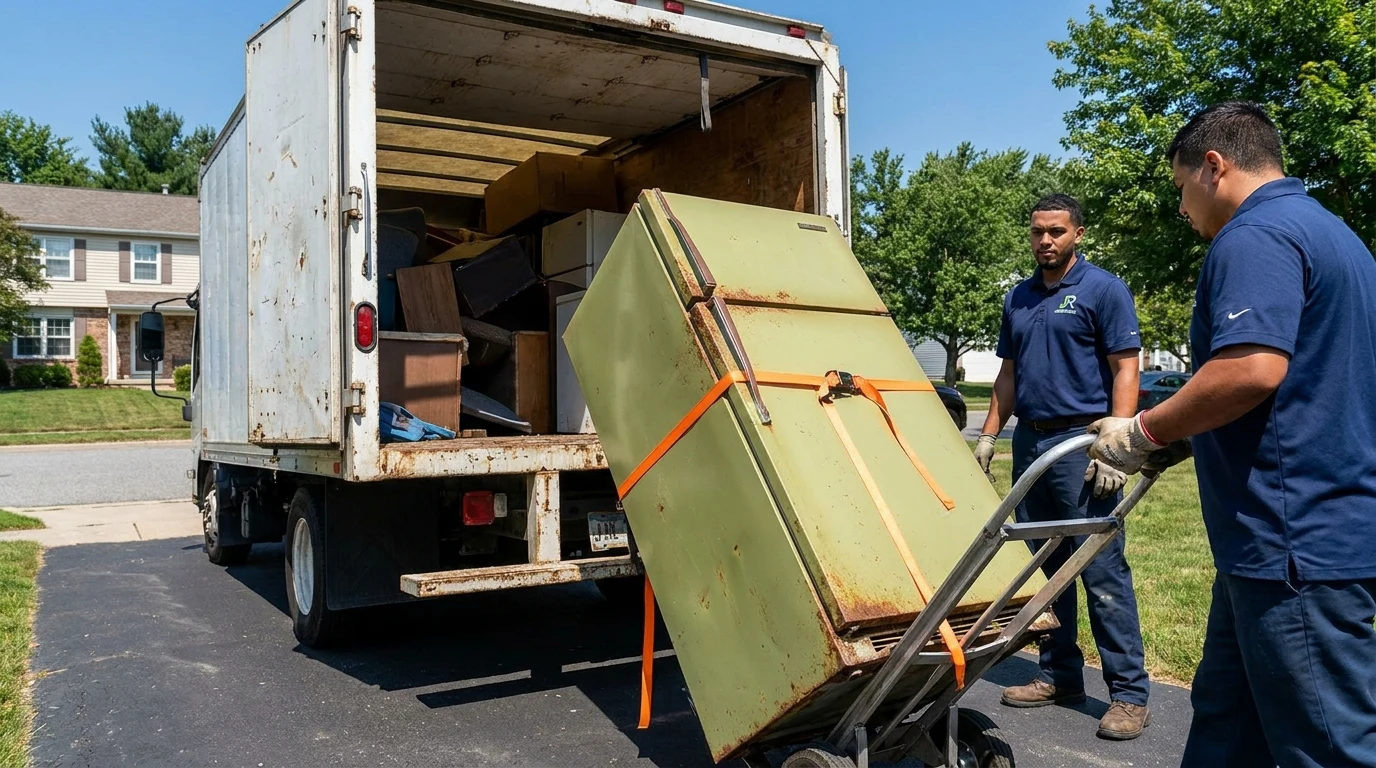
Private appliance removal typically runs $100-$200 for a single refrigerator in San Diego, depending on the crew, the location, and any access challenges. Some crews charge more for tight stairwells or apartments without elevator access. That price generally includes loading, transport, and certified refrigerant recovery.
Junk removal services that take appliances often bundle the fridge into a larger load at a lower per-item rate if you’re clearing out multiple items at once. If you’re doing a garage cleanout or moving, it almost always makes sense to handle everything in one trip.
The Miramar Landfill does accept refrigerators, but they require refrigerant recovery before drop-off and charge a per-item fee on top of the standard gate fee. For one fridge, a professional pickup is usually comparable in cost once you factor in your time, truck rental, and the landfill fees.
Scrap metal dealers are another option, but only if the unit has already had its refrigerant removed by a certified technician. Don’t assume a scrap yard will handle it. Call first.
Getting a heavy fridge out safely
A full-size refrigerator typically weighs 200-300 pounds. A side-by-side with an ice maker can push 350. That’s before you factor in the awkward shape, narrow doorways, and the kitchen floor you don’t want to scratch.
The right tool is an appliance dolly, also called a refrigerator dolly or two-wheel hand truck. It’s different from a standard moving dolly. It’s taller, has straps to secure the unit upright, and is built for the weight. Rental centers carry them if you’re going the DIY route.
A few things to handle before moving: empty the fridge completely, remove all drawers and shelves (they shift and break), tape the doors shut, and unplug it at least 24 hours before the move if it has ice-maker water lines. Drain the water line or be prepared for a wet floor.
Two people is the minimum for a safe move on level ground. Add a third for stairs. The technique matters too: tilt the fridge slightly back onto the dolly, secure the strap, and keep the weight over the wheels. Trying to carry it flat, or with only one person, is how backs get hurt and floors get gouged.
Through a doorway, measure first. Standard refrigerators are 30-36 inches wide. Interior doorways in San Diego homes are often 32 inches. Removing the fridge doors (not the cabinet doors) can buy you an extra 2-3 inches when you need it. The doors come off with a screwdriver and a second set of hands.
Stairs add real risk. If the path involves more than a few steps, a professional crew with the right equipment is a better call than improvising. The cost of a strained back or a dented appliance on a handrail is higher than a pickup fee.
Our appliance removal service handles the heavy lifting from any room in the house. We bring the right dollies, the right number of people, and the certified recovery setup. If you’re already clearing out a space, our full-service junk removal can handle the fridge and everything else in one trip.
When to call us
If your fridge doesn’t qualify for the SDG&E rebate, needs to be gone quickly, or involves stairs or tight access, a professional pickup is the practical choice. We handle certified refrigerant recovery as part of every appliance job.
Call us at (858) 925-5546 for a same-day estimate.