Moving from a home you’ve lived in for decades is one of the hardest transitions a person faces. It’s not just about packing boxes. It’s about deciding what to do with fifty years of accumulated life. That process deserves more than a rushed weekend and a dumpster in the driveway.
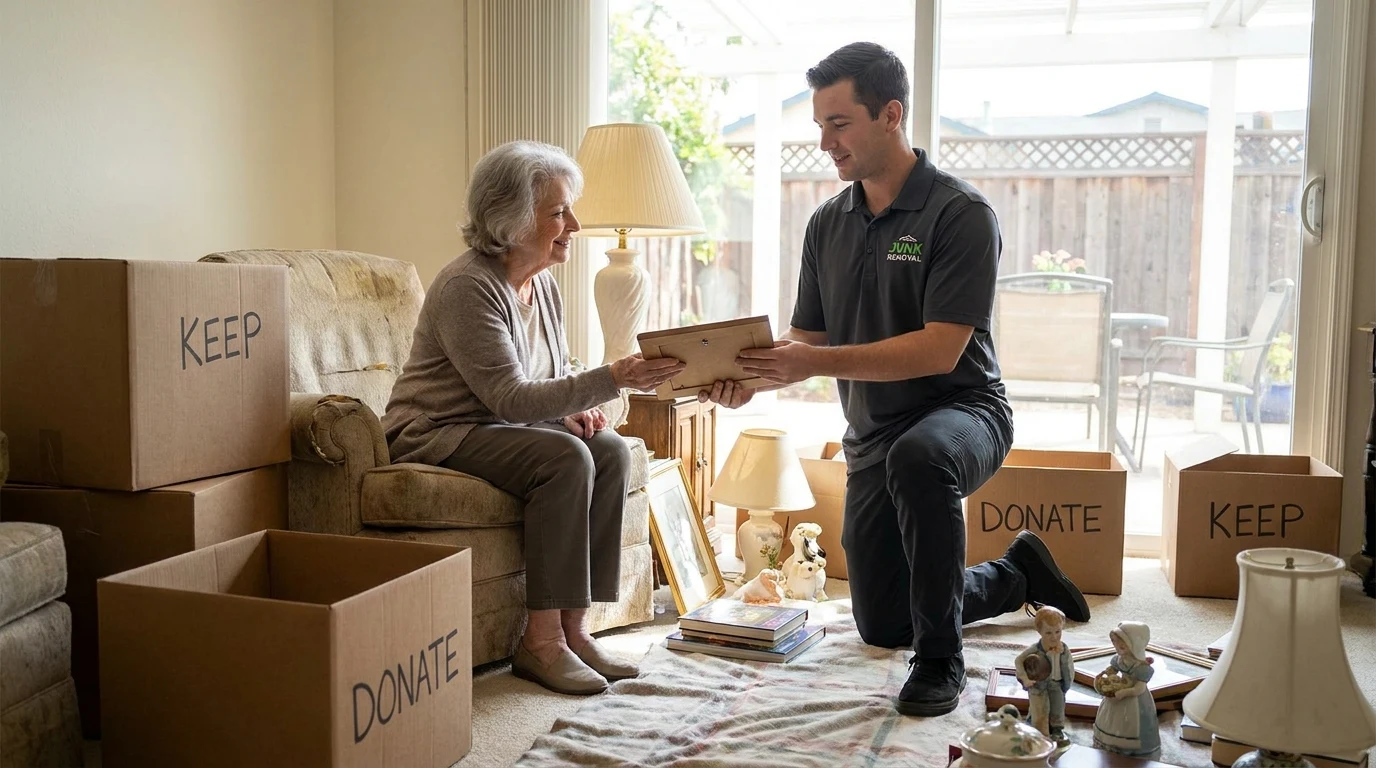
What downsizing really asks of a family
Most families underestimate what they’re getting into. A parent’s home isn’t just furniture and boxes. It’s china sets from a wedding in 1968, a garage full of tools from a career, closets that haven’t been opened in years, and a lifetime of paperwork mixed in with things that actually matter.
The emotional weight is real. Adult children fly in from out of state, time is tight, and everyone has an opinion about what to keep. Disagreements happen. Grief shows up in unexpected places. A beloved armchair becomes the center of a three-hour debate.
The physical scope surprises people too. A 2,000-square-foot home that’s been occupied for 30 years typically has far more volume than anyone expects. Furniture that looked manageable on first glance turns out to be heavy, awkward, or built in a way that makes it hard to move without the right equipment.
Families in San Diego also face the practical reality of timing. If Mom or Dad is moving into an assisted living facility in Escondido or a smaller condo in Carlsbad, there’s usually a hard deadline tied to a lease start or a closing date. That pressure can make the sorting process feel rushed, which is when mistakes happen: good things get donated by accident, paperwork gets lost, and items meant for family members never make it to them.
The key is breaking the job into clear phases. Sorting comes first. Hauling comes last. And the people involved need time to make decisions they can live with, not ones they’ll regret.
Sorting a lifetime of belongings with care
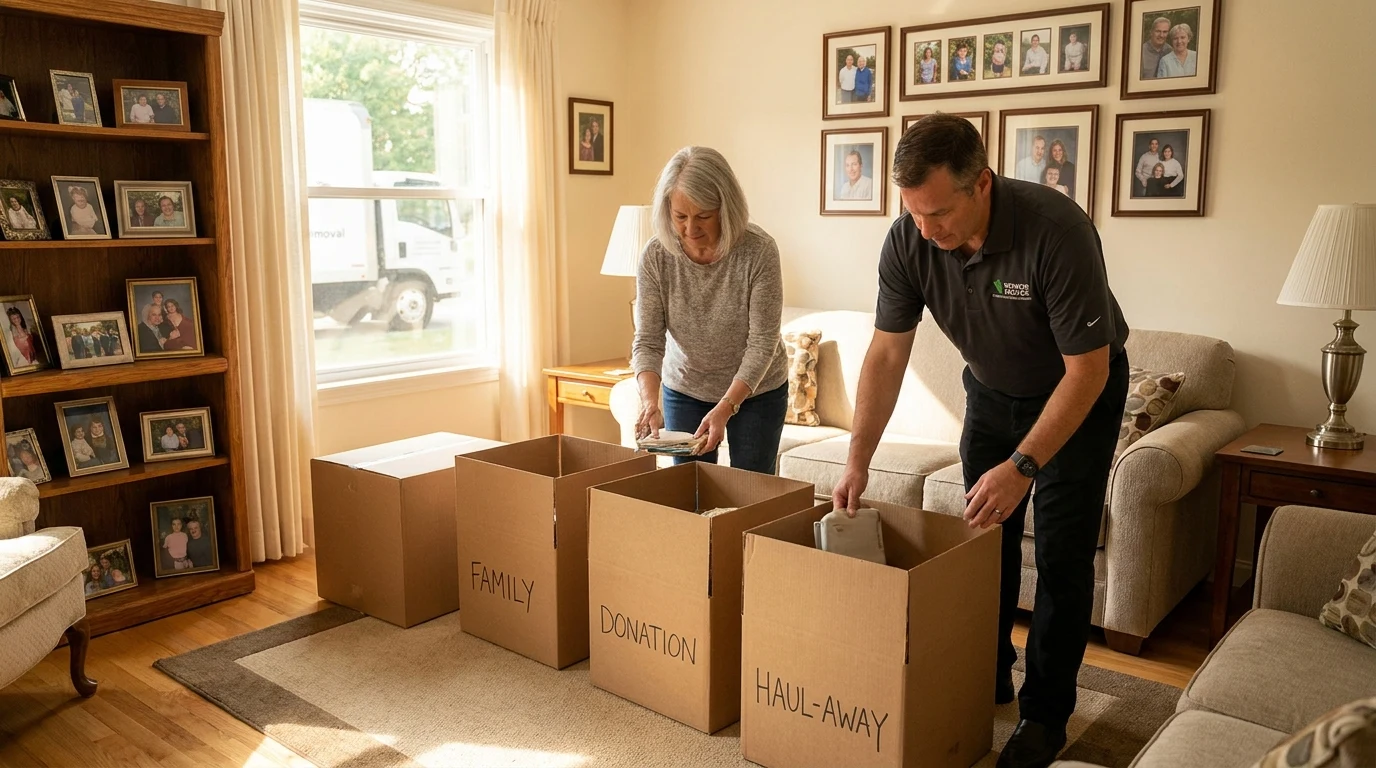
A good sorting process starts with categories, not rooms. Trying to clean out one room at a time usually leads to moving things from one room to another without actually making decisions. Instead, work through the home with four destinations in mind: keep, gift to family, donate, and haul away.
The “keep” pile is for whatever moves with your parent to their new home. Be realistic about what fits. A two-bedroom apartment or an assisted living room simply can’t hold everything from a four-bedroom house. If it doesn’t fit and isn’t genuinely irreplaceable, it probably belongs in another pile.
The “gift to family” pile is where things with sentimental or practical value go when they’re headed to children, grandchildren, or close friends. Make this pile concrete. Write names on items or use sticky notes. Vague plans like “someone in the family wants this” often result in things sitting in a garage for years until they end up at a donation center anyway.
For the donation pile, be honest about condition. Thrift stores and charities in San Diego have real quality standards. Furniture with broken frames, stained fabric, or missing hardware often can’t be accepted. Same with electronics more than a decade old or clothing that’s badly worn. Donating those items doesn’t save them. It just shifts the disposal problem to a volunteer.
The haul-away pile is for everything that doesn’t fit the other three categories: items too worn to donate, furniture no one wants, boxes of accumulated clutter, and the odds and ends that didn’t make it into any other category. This is where a full-service junk removal crew comes in. They handle the heavy lifting so the family doesn’t have to.
Donating, gifting, and letting go
Getting things to the right places takes more coordination than most people plan for. Donations don’t organize themselves. Furniture charity pickups in San Diego often require a week or more of advance notice, and they won’t take everything. Knowing this ahead of time saves a lot of frustration.
For furniture and household goods that are in good condition, a few San Diego-area organizations offer scheduled pickups. Habitat for Humanity ReStore, Goodwill, and local church-based donation programs are worth calling first. Have photos ready and ask about their specific requirements before scheduling. Large items in rough condition usually need to go a different route.
For items going to family members, logistics matter. Shipping heavy items across the country is expensive. If a grandchild in Oregon wants the dining room set, the family needs a plan for how to get it there, and that plan needs to exist before moving day, not on the morning of.
Letting go of things that don’t fit any category can be genuinely hard. It helps to frame it practically: the goal isn’t to discard a person’s history. It’s to carry that history forward in the right forms. Photos can be scanned and shared digitally. The best pieces go to people who will use them. The rest gets cleared so the new chapter can start clean.
The estate cleanout guide for San Diego covers some of this terrain in more detail, particularly when the home needs to be fully emptied for a sale or estate settlement.
Coordinating with movers and family
The biggest scheduling mistake in a senior move is trying to run the cleanout and the move simultaneously. They’re two different jobs, and they need two different crews and two separate windows of time.
The sorting and donation phase should happen first, at least a week or two before the move. This gives donation organizations time to schedule pickups and gives family members time to collect their items. Once sorting is done and donations are out, what’s left falls into two categories: what moves with your parent and what gets hauled.
The moving crew handles the keep pile. A junk removal crew handles everything else. Trying to use the movers to dispose of unwanted items rarely works out. Most moving companies aren’t set up for disposal, and the per-hour cost makes it an inefficient choice.
Coordinating family members who are traveling in for the move takes its own planning. Set clear roles before everyone arrives. Who’s handling the paperwork? Who’s calling the donation centers? Who’s supervising the movers? Who’s doing a final walkthrough before keys are handed over? Vague division of labor leads to duplication and conflict, especially when everyone is already stressed.
For families managing a senior move from a distance, having a local point person, whether that’s a sibling, a senior move manager, or a trusted neighbor, makes a significant difference. San Diego has a number of senior move management professionals who specialize in exactly this kind of coordination if the family doesn’t have someone local to take the lead.
Our estate cleanout service is built for situations like this, where the home needs to be cleared efficiently while the family manages everything else that comes with a major transition.
A patient, respectful haul-away
The last step is clearing everything that’s staying behind. This is the haul-away phase, and the tone matters as much as the logistics.
This isn’t a regular junk job. The home has meaning. The person moving has likely lived there for a long time. A crew that treats a worn couch like garbage when it carried 30 years of Sunday afternoons isn’t the right crew for this kind of work. That’s not about being precious. It’s about reading the room and showing basic respect for what the moment means.
A good crew shows up on time, works efficiently, and communicates clearly about what they’re taking and where it goes. They handle furniture removal without gouging walls or dragging things across hardwood floors. They ask when they’re not sure about something rather than assuming.
Volume-based pricing applies here the same as any job. The crew assesses what’s left after the sorting and donation phase, gives a clear estimate, and gets it done. Most senior downsizing haul-aways run one to two full loads, though a larger home that hasn’t been cleared in decades can run more. There’s no pressure to decide on the spot.
If you’re managing a senior move that also involves clearing furniture, appliances, and accumulated belongings, full-service junk removal is the cleanest way to finish the job. You don’t have to make multiple trips to a donation center, rent a truck, or figure out what to do with the items no one wanted. One call covers it.
For families navigating this in San Diego, the City of San Diego Environmental Services site has information on bulky item pickup and disposal resources if some items are going through city channels. For anything being donated, CalRecycle’s resource locator can help identify certified recyclers for appliances and electronics that can’t go to a thrift store.
When to call us
If your family is preparing for a senior move in San Diego and you need the home cleared with care and efficiency, we’re here to help. We work around your timeline and treat the job with the respect it deserves. Call us at (858) 925-5546 for a same-day estimate.