Storage units have a way of filling up fast and emptying slowly. You open the door after months (or years), face a wall of boxes and old furniture, and realize the monthly fee is no longer worth it. Getting out of a unit in San Diego means making real decisions quickly, especially if you’re on a deadline.
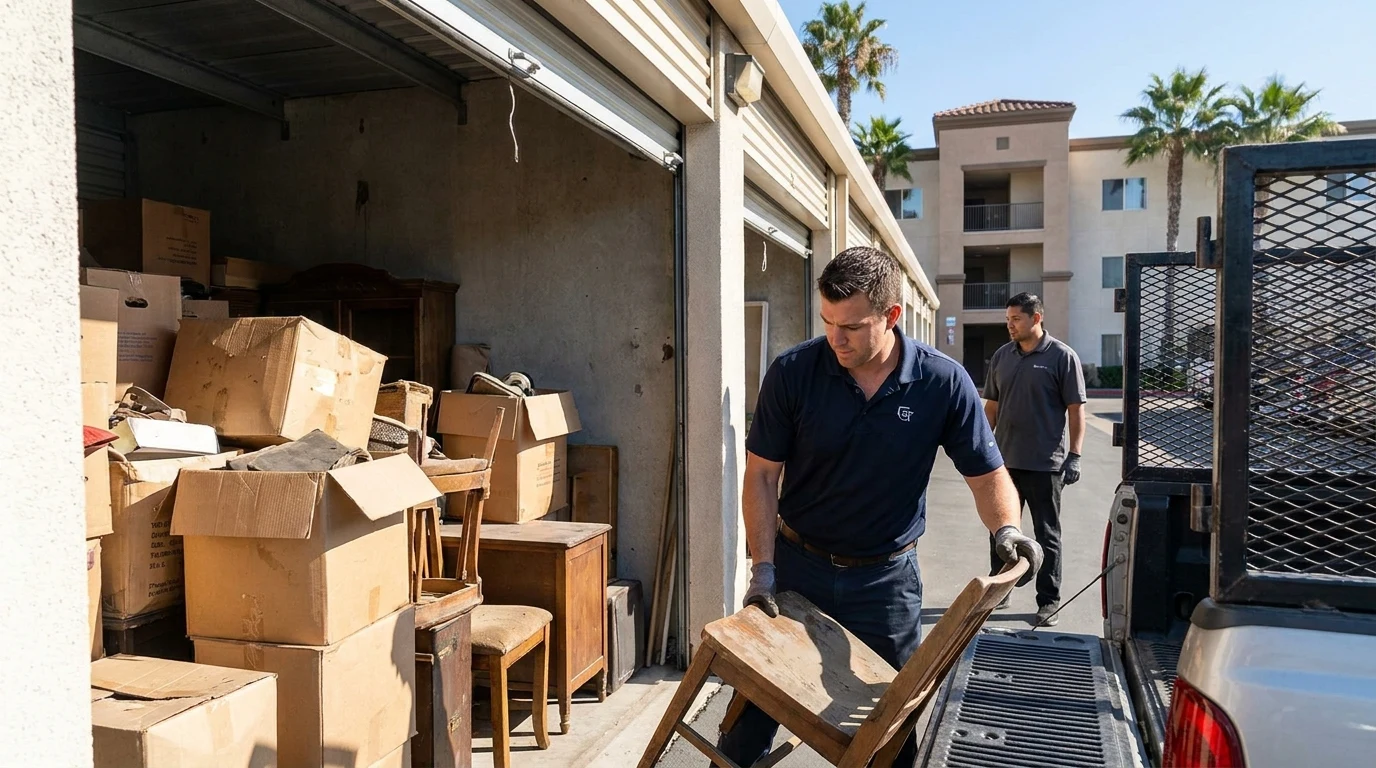
When it’s time to clear the unit
The clearest sign is simple: you’re paying more to store things than the things are worth. A 10x10 unit in San Diego runs $150-$250 a month at most facilities. If you haven’t opened the door in six months, the math usually doesn’t work.
Other common reasons to clear out: a family member passed away and their unit needs to be emptied, you’re moving out of state, or your situation changed and you just don’t need the stuff anymore. Sometimes a facility is raising rates or closing, giving you a hard deadline.
Either way, once you decide it’s time, a few things help the process go faster. First, check your rental agreement. Most facilities require you to leave the unit broom-clean, with the lock removed. Second, look at the access hours. Some San Diego storage facilities limit access to business hours, which affects when you can schedule a crew. Third, let the office know you’re clearing out so they can have your paperwork ready and confirm the move-out date.
Don’t wait until the last day. Cleanouts go faster when you have flexibility, and surprises (broken furniture, items too big for your car, things you forgot were there) always take longer than expected. Give yourself at least a weekend, or plan to bring in a crew who can knock it out in a single visit.
Sorting what’s worth keeping
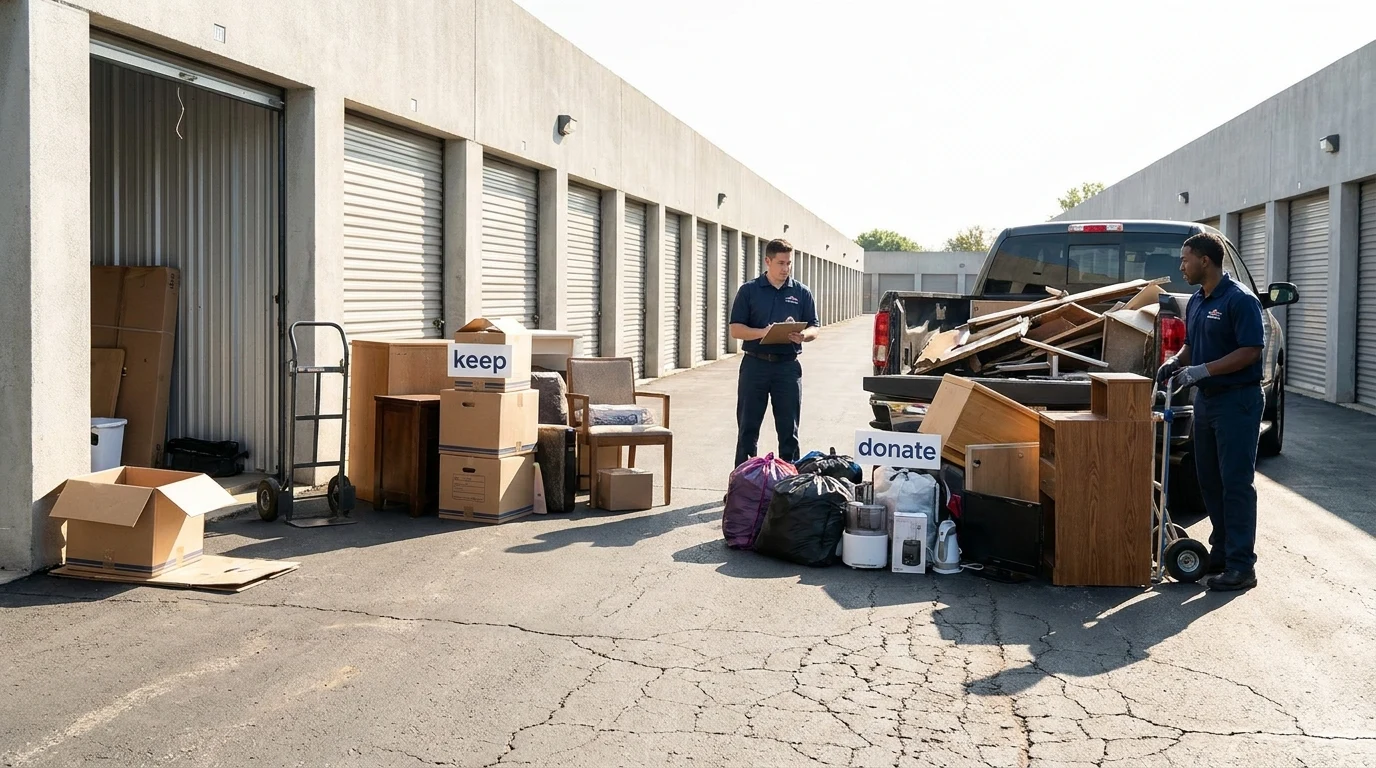
The hardest part of a storage cleanout isn’t the lifting. It’s the deciding. Most people discover three categories of items: things they clearly want to keep, things they’d rather donate or sell, and things that just need to go.
Before you start moving anything, bring a few supplies: heavy-duty trash bags, markers, and if possible, a folding table to set things on while you sort. Work from the front of the unit to the back. Pull items out in manageable loads, set them outside the unit, and sort as you go. Don’t drag everything onto the concrete all at once or you’ll create chaos.
Be honest about what you’ll actually use. If a piece of furniture has been in a unit for three years without being missed, you probably don’t need it in your home. If boxes haven’t been opened, consider whether the contents are worth the effort of moving them. Sentimental items deserve real consideration, but this is also a good moment to be practical.
Items in good condition, especially furniture and appliances, can often be donated. San Diego has several organizations that will pick up usable items, so you don’t have to transport them yourself. Our estate cleanout service can help coordinate the haul-away portion while you focus on the keep pile. For a deeper look at how donation pickups work locally, the estate cleanout guide for San Diego covers it well.
One more thing: check every box before it leaves. People find cash, jewelry, and important documents in storage units all the time, tucked inside items they assumed were just junk.
Auctioned and abandoned units
If you’re clearing out a unit that was auctioned (either one you won at auction or one that belonged to a family member who fell behind on payments), the cleanout process is a bit different.
Auction buyers typically have 24-48 hours to remove everything from the unit, depending on the facility’s rules. That’s a tight window. The contents are often a mix: some salvageable, some not. You can’t always tell what’s in boxes until you’re on-site, which makes planning harder.
Professional cleanout crews are common in the auction world for this reason. A crew can load everything into a truck quickly, then help sort at a staging area or simply haul it all to the appropriate disposal and donation facilities. It’s much faster than trying to sort on-site in a 5x10 or 10x20 corridor.
For families dealing with a loved one’s abandoned unit, the emotional weight adds to the logistical challenge. A professional crew handles the physical work without judgment, which matters when you’re already dealing with a difficult situation. Our full-service junk removal is built for exactly this kind of job.
If the unit was auctioned due to non-payment and you’re the original renter trying to reclaim items, talk to the facility directly. California law governs the lien-sale process, and the facility is required to follow specific steps before auctioning contents. If the sale already happened, you may not have recourse, but the facility can tell you what happened and whether anything was held aside.
What a cleanout costs by unit size
Storage unit cleanout pricing is based primarily on truck space, which correlates roughly with unit size.
A 5x5 unit (the smallest, about the size of a walk-in closet) usually costs $150-$300 to clear, assuming it’s reasonably packed. These are fast jobs and often handled in under an hour.
A 5x10 unit (standard single-car garage equivalent) runs $250-$450 depending on what’s inside. Heavy items like furniture or appliances push the price up, because they take more truck space and more labor to move safely.
A 10x10 unit (the most common size, roughly a bedroom’s worth of stuff) typically runs $400-$650. At this size, you’re often looking at a partial truck load, sometimes more.
A 10x20 unit (two-car garage equivalent) can run $600-$1,000 or more for a full cleanout. These jobs sometimes require two trips or a larger truck.
A few things affect the final number. If items need to be carried down stairs or through narrow corridors, that adds labor. If there’s a significant amount of hazardous material (old paint cans, propane tanks, chemicals), those items need special handling and can’t go in the standard load. And if the facility charges for parking a truck or limits access times, that factors in too.
The best way to get an accurate number is a quick on-site look. Most reputable crews will give you a no-obligation estimate before they start loading. For context on how pricing works across different job types, our junk removal cost guide breaks it down clearly.
Coordinating with the storage facility
A little communication with the facility goes a long way.
First, confirm the access hours and whether trucks are allowed in the corridor or need to stage outside. Some facilities have narrow aisles that can only fit a standard vehicle, not a full box truck. Others have rules about parking times or require advance notice for large vehicles. Knowing this ahead of time prevents delays on cleanout day.
Second, ask whether the facility has a dumpster on-site and whether renters are allowed to use it. Some do, most don’t. If you’re doing a partial cleanout and just have a few bags of trash, this can save a trip. For a full cleanout, you’ll need a truck regardless.
Third, ask about the move-out process. Most facilities want the unit empty and the lock removed before they’ll process your final month and close your account. Get that in writing or at least confirmed by email so there’s no dispute later about pro-rated fees or additional charges.
Finally, take photos. Walk through the empty unit with your phone before turning in the key. Document the condition (broom-clean, no damage) so you have a record if any questions come up later. Most facilities are straightforward, but it’s good practice.
If you’re working with a crew, let them know about any facility rules before they arrive. A good crew will work within whatever constraints the site has, but they need to know in advance.
When to call us
A storage unit cleanout is one of those jobs where having a crew makes the whole thing finish in an afternoon instead of dragging across a month. If you’re on a tight deadline, dealing with a unit you’ve never seen, or just don’t have a truck, we’re ready to help. Call us at (858) 925-5546 for a same-day estimate.