An old shed that’s rotting, rusting, or just in the way takes up space you could actually use. Most homeowners in San Diego want it gone but aren’t sure whether to tear it down themselves or call a crew.
Tear-down vs haul-away of an existing shed
These are two different jobs, and knowing which one you need changes the cost and the process.
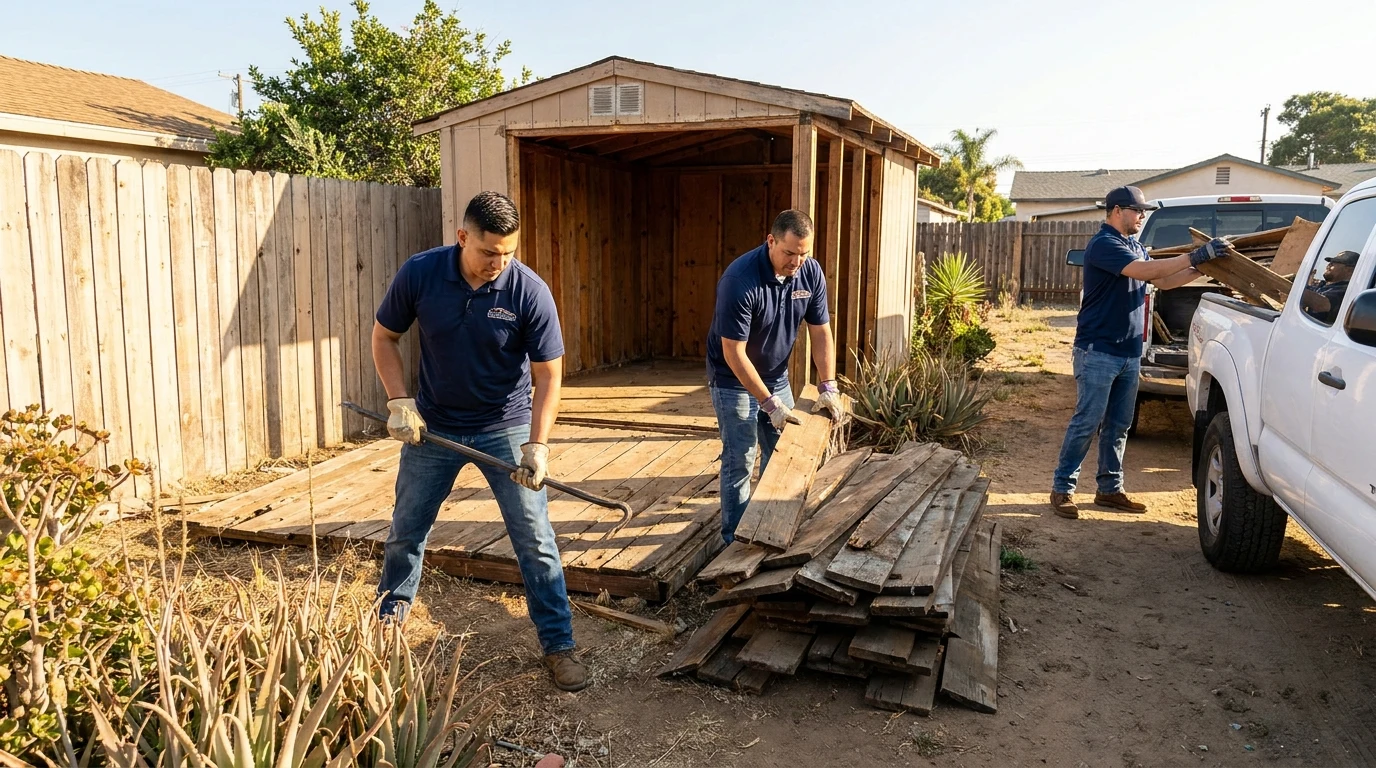
If your shed is still standing, you need tear-down plus haul-away. That means a crew breaks the structure apart, loads every piece, and clears the site. It’s a half-day to full-day job depending on the shed size and what it’s made of.
If your shed is already collapsed or partially dismantled, you might just need haul-away. The material is already down. A crew loads it, drives it off, and you’re done faster.
In most cases, a full-service junk removal crew handles both. They show up with the right tools, break the structure down safely, and haul every scrap off your property. You don’t rent a dumpster, you don’t sort the debris, and you don’t make three trips to a transfer station. Our construction debris removal service covers exactly this kind of work.
One thing to confirm before calling anyone: does your shed have electricity running to it? If it does, you need a licensed electrician to disconnect the circuit at the panel before any demolition starts. That’s not something a hauling crew handles, and working around live wiring isn’t safe for anyone.
If the shed is just storage with no power, no water, and no permanent anchoring, a crew can typically start the same day you call.
Wood, metal, and plastic sheds
The material matters because it affects how long tear-down takes and what happens to the debris afterward.
Wood sheds are the most common in older San Diego properties. They break down with a pry bar and reciprocating saw. The boards separate easily, and the material loads fast. Painted or treated wood goes to the landfill since it can’t be composted. Untreated lumber sometimes gets recycled or repurposed, but most of what comes off a 20-year-old backyard shed ends up as general debris.
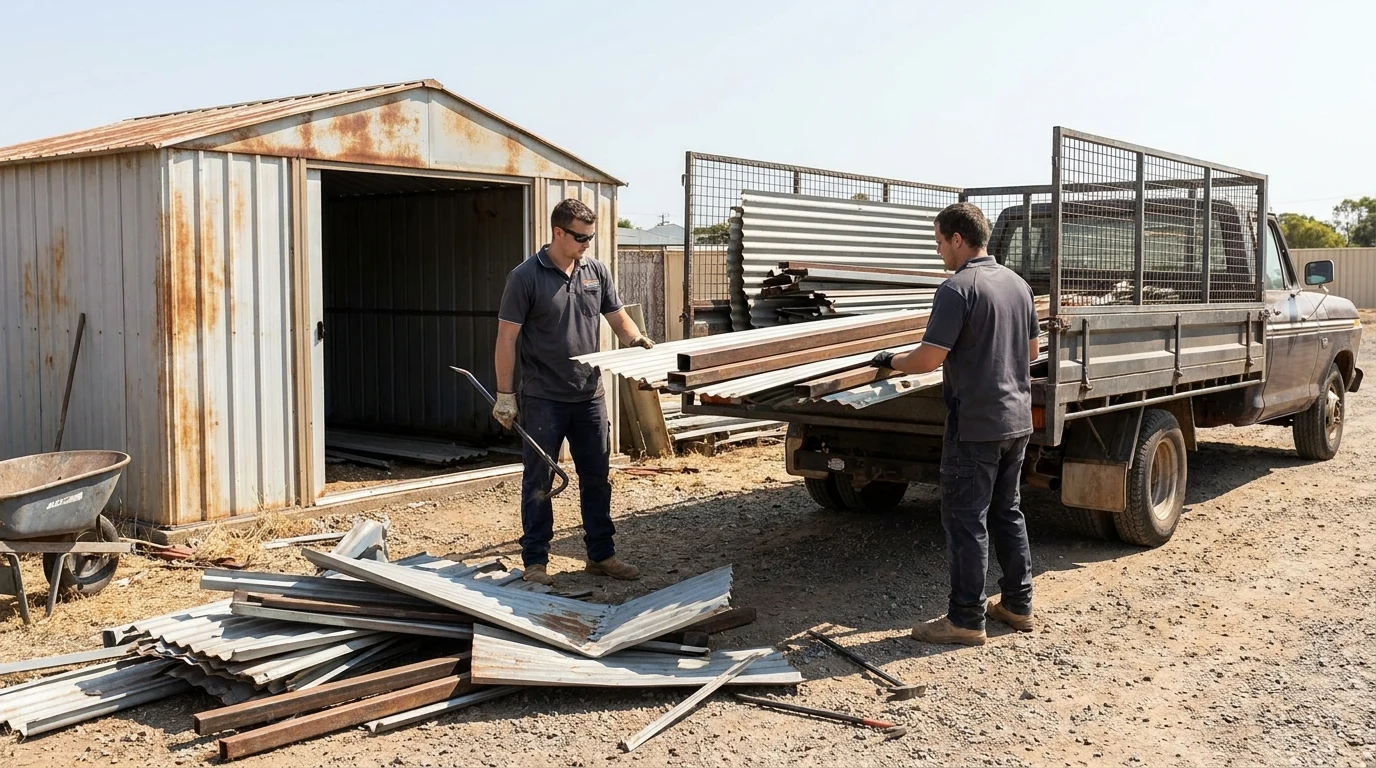
Metal sheds (galvanized steel panels, aluminum frames) are more durable to take apart because the fasteners corrode over time and panels warp. Screws strip, corners buckle. A crew with proper tools gets through it, but it takes longer than wood. On the upside, clean scrap metal has recycling value, so some of the material may be diverted from the landfill.
Plastic resin sheds (the kind sold at big-box stores) are lightweight but annoying. They flex and crack instead of breaking cleanly. The pieces can be large and awkward. They typically go to the landfill since most curbside recycling programs don’t accept that type of resin. Our team handles all three types as part of standard junk removal service.
Regardless of material, if your shed is larger than 10x12 feet, plan on a two-person crew minimum. Bigger structures need more hands to break down efficiently and safely.
What’s under the shed: slabs and debris
This is the part most homeowners forget about until the shed is gone.
Many San Diego sheds sit on a concrete pad. Removing the shed itself doesn’t remove the slab. If you want the slab gone too, that’s a separate scope of work. Concrete removal requires a jackhammer or saw, heavy lifting, and a truck rated to carry the weight. It adds cost and time, but it’s absolutely doable. If you want a clean, level surface ready for new landscaping or a fence, the slab needs to come out.
Some sheds sit on gravel, decomposed granite, or compacted soil with a wood perimeter frame. That perimeter frame rots over time, and once the shed is down, you’re often left with buried wood pieces and gravel that’s mixed with years of organic debris. A thorough cleanup means digging that material out rather than leaving it to attract pests.
Under older sheds, it’s not unusual to find accumulated trash. Old paint cans, solvents, and other chemicals occasionally get stored in sheds and forgotten. The City of San Diego Environmental Services operates household hazardous waste programs where you can drop these items off properly. Check sandiego.gov/environmental-services for current drop-off schedules. A junk removal crew can haul the clean demolition debris, but hazardous materials like old solvents or pesticides need to go through the right channels.
Once the shed and any foundation work is done, our yard waste removal service can take care of any overgrowth or organic debris that’s been piling up around the structure.
Permits and property-line considerations
For most residential shed demolitions in San Diego County, you don’t need a permit to tear down a non-permitted accessory structure. However, it’s worth a quick check before you start.
If your shed was permitted when it was built, the county may require a demolition permit to close out the original permit. This is more common with older, larger structures that were built with a foundation and passed inspections. Permit requirements vary between the City of San Diego, unincorporated San Diego County, and other municipalities like Chula Vista, Escondido, or Oceanside, so look up your specific jurisdiction if you’re unsure.
Property-line setbacks matter more when you’re planning what comes next. San Diego County rules on accessory structures typically require setbacks from side and rear property lines. If you’re removing an old shed and building a new one (or adding another structure), verify the current setback rules before you design the replacement. Some older sheds were built in violation of setbacks that have since been updated.
HOA rules add another layer. Many communities in San Diego have covenants that govern what structures you can place in your yard and what the approval process looks like. If your property has an HOA, confirm with them before starting demolition so you’re not creating a dispute over what happens next.
None of this affects the hauling side of the job. A crew removes what’s there. The permit and setback questions are about what you do before and after.
What shed removal costs
Pricing for shed demolition and removal in San Diego depends on three variables: shed size, material, and whether a foundation needs to come out too.
For a small 8x8 wood or plastic shed with no foundation work, you’re typically looking at $250-$450 for tear-down and haul-away. That assumes a single crew visit, no hazardous materials, and reasonable access (crew can get a truck reasonably close to the backyard).
A mid-size shed, say 10x12 or 10x16, in metal or wood runs closer to $400-$650. The larger footprint means more material to load and more time on-site.
Large structures, 12x20 or bigger, or anything with a slab removal, start at $600 and go up from there. Concrete is heavy. A 4-inch slab at 12x20 feet weighs over 5,000 pounds. That material requires special handling and a truck with the right capacity.
Accessibility is a real factor. If your shed is in a backyard with a narrow gate and the crew has to carry debris a long distance to reach the truck, that adds time and cost. Wider access means faster work means lower cost.
One thing that keeps costs down: have the shed area cleared of anything you want to keep before the crew arrives. Tools, garden equipment, seasonal items stored in the shed should be moved out beforehand. Crew time spent sorting through the contents of the shed gets charged at the same labor rate as the demo itself.
For a straight estimate on your specific shed, the easiest way is a quick call. We can often give you a firm price based on a few photos and dimensions before anyone shows up.
When to call us
If you’ve got a shed that needs to come down and you’d rather spend the weekend on something else, we can take care of the whole job. We handle tear-down, debris loading, haul-away, and sweep the area clean when we’re done. Call us at (858) 925-5546 for a same-day estimate.