A tenant is gone. The unit they left behind is not. Between abandoned furniture, trash bags, and belongings you can’t touch without following a legal process, getting a property back in rentable shape is more complicated than it looks.
What landlords and agents face after a tenant leaves
The moment a tenant vacates, either voluntarily or through an eviction order, landlords are on the clock. Every day a unit sits empty costs money. But rushing the cleanout without the right process can cost even more.
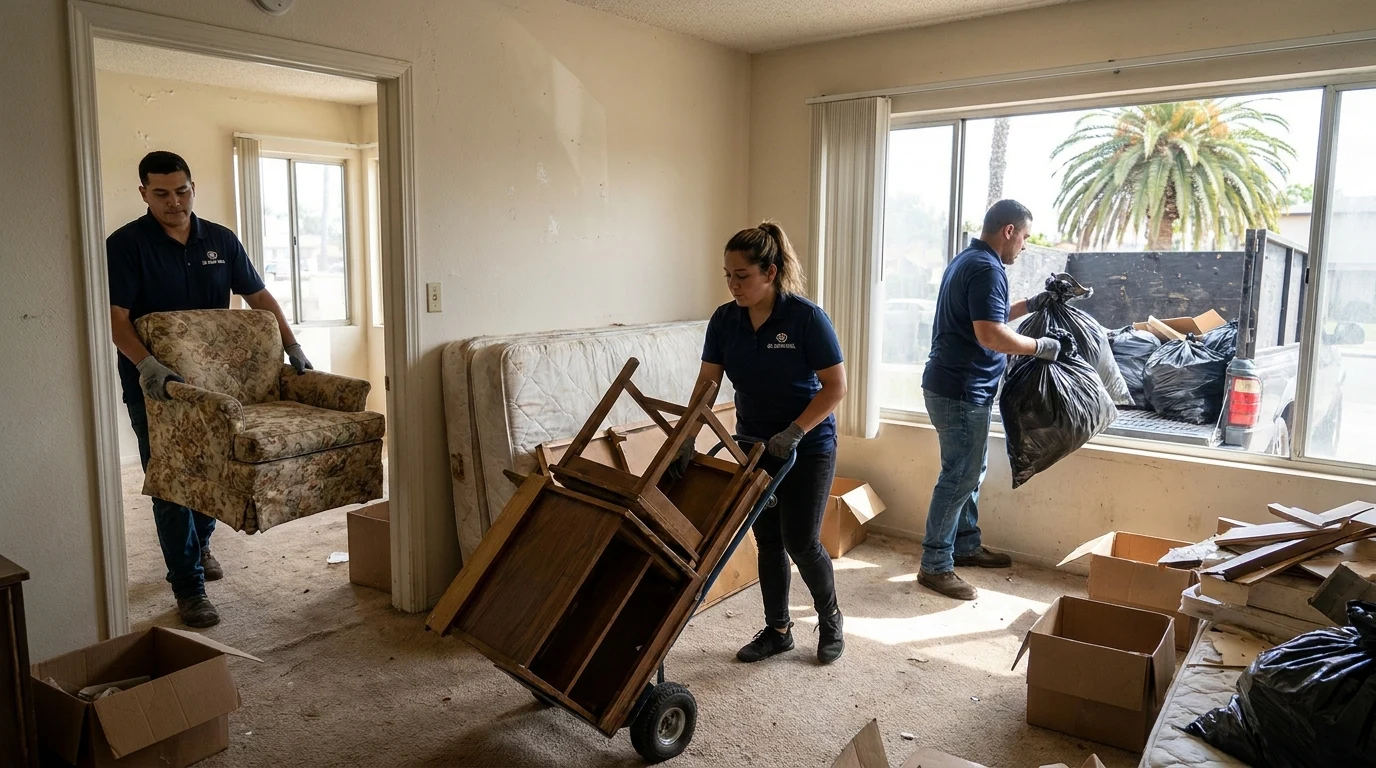
In most eviction situations, the property needs more than a light clean. Tenants who leave under difficult circumstances often leave behind significant debris: old furniture, boxes of belongings, appliances, and garbage that accumulated over months or years. Foreclosures add another layer, sometimes involving properties that sat vacant for extended periods before the bank or new owner took possession.
What makes these cleanouts different from a standard junk removal job is the volume and the state of the space. You’re not clearing one bedroom’s worth of unwanted items. You’re often looking at an entire household of abandoned goods, sometimes with damage to floors, walls, or fixtures underneath. The property can’t be photographed, staged, or shown until all of it is out.
San Diego’s rental market moves fast. A clean, empty unit re-listed quickly recovers its vacancy loss. A unit that sits for two or three extra weeks while a landlord figures out removal logistics represents real dollar losses. That’s why having a crew that can turn a property around in one day matters.
For landlords managing multiple properties, or property managers handling post-eviction cleanouts across a portfolio, speed and reliability aren’t just conveniences. They’re operational requirements.
Handling abandoned belongings legally
California law is specific about what you can and can’t do with property a tenant leaves behind. This isn’t a gray area, and getting it wrong exposes landlords to liability.
Under California Civil Code Section 1983, landlords must notify former tenants of abandoned property before disposing of it. The required notice period depends on the estimated value of the items left behind. If the property is worth less than $700, the timeline is shorter. If it’s worth more, the landlord must give the former tenant 18 days to claim it (15 days if notice was personally served).
That waiting period applies to belongings that appear to have value. Obvious trash, damaged items, and debris don’t require the same treatment. The line between “abandoned property” and “garbage” isn’t always obvious, which is why documentation matters.
Before any crew arrives, a landlord or property manager should:
- Walk the unit and photograph everything as it was left
- Create a written inventory of any items that could reasonably be claimed as personal property
- Send the required written notice via certified mail and, if possible, email
- Note the date the notice was sent and the deadline for response
Once the legal waiting period has passed with no response from the tenant, the property can be cleared. At that point, items valued below the threshold can be disposed of. Items above it must be sold at public auction if unclaimed, with proceeds (minus costs) held for the former tenant.
This process doesn’t have to be complicated, but it does have to be followed. A good cleanout crew will work around your timeline once the legal steps are satisfied.
Fast turnaround for re-listing
Once the legal clock has run and you’re clear to proceed, the goal is to get the unit empty, clean, and photo-ready as fast as possible.
A full eviction or foreclosure cleanout typically involves loading out all remaining furniture, appliances, clothing, boxes, and debris. This is not a job for a single person with a pickup truck. Depending on how much was left behind, it can fill one to three full truck loads.
The advantage of a professional crew is labor and logistics. They bring the trucks, the equipment to handle heavy furniture and appliances, and the hands to move quickly through a space. A one-bedroom apartment can often be cleared in two to four hours. A larger home or a foreclosure that’s been sitting may take a full day.
After the space is empty, most property managers want it broom-swept and ready for a cleaning crew or contractor to follow. That’s the standard handoff point. A junk removal crew handles removal; the deep cleaning or repairs come after.
Same-day hauling is often available for eviction and foreclosure situations where a property manager needs to move quickly. If you book early in the day, a crew can sometimes be on-site the same afternoon. Faster turnaround means faster re-listing, which is the whole point.
The City of San Diego Environmental Services department provides guidance on disposal requirements for different material types, which is useful context when a cleanout involves a mix of regular furniture, appliances, and potential hazardous materials like old paint or chemicals left behind by a tenant.
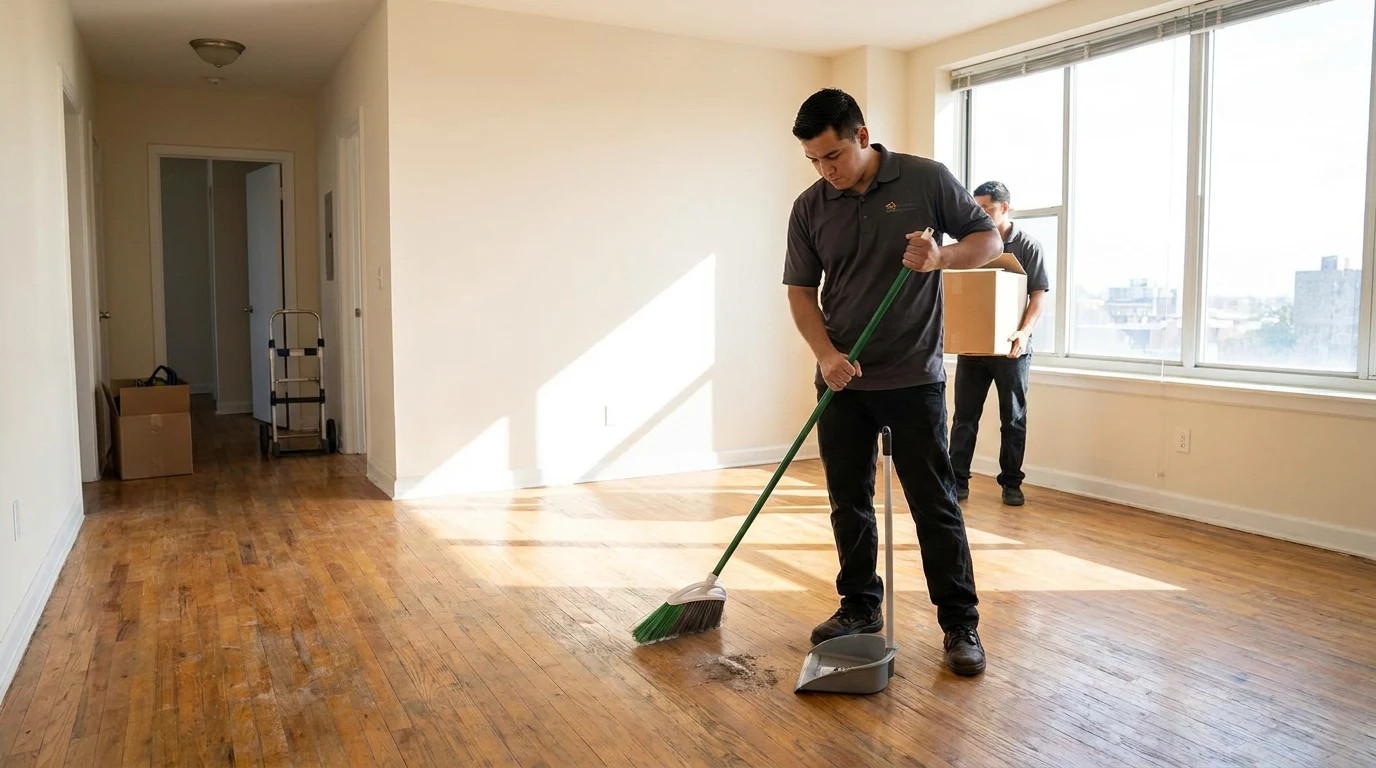
Photo documentation for the file
Documentation isn’t just a legal formality. It protects you if a former tenant claims property was wrongfully disposed of or if an insurance claim arises from damage found during the cleanout.
The standard approach is before-and-after photos taken room by room before any removal begins. Cover every angle, including:
- Overall room shots showing the volume and condition of abandoned items
- Close-ups of any damage to floors, walls, doors, or fixtures
- Specific items of potential value (furniture, electronics, appliances)
- Any hazardous or unusual materials
These photos serve multiple purposes. They support the landlord’s case if the former tenant disputes the cleanout. They document pre-existing damage so a landlord can distinguish tenant damage from wear and tear. And they support any insurance or security deposit claim.
A good practice is to create a timestamped folder for each property, organized by address and date. Keep the photos with the written inventory and copies of the abandonment notice. If a dispute arises months later, you’ll have everything in one place.
Some property managers also find video walkthroughs useful, especially for larger homes or foreclosures where the volume of abandoned property is significant. A short video walking through each room before removal adds a layer of documentation that photos alone don’t fully capture.
After the cleanout, take the same room-by-room photos again. The before and after set, kept together, gives you a complete record of exactly what the property looked like when you took possession and what it looked like when it was cleared.
What a property cleanout costs
Cost depends on volume, not the number of items. Junk removal pricing is based on how much space your load takes in the truck, measured in fractions of a full load.
For a one-bedroom apartment left in rough condition, expect somewhere in the range of $350-$700 depending on what’s there. A two- or three-bedroom home with significant abandoned furniture and appliances could run $600-$1,200 or more. Foreclosures that have been sitting for a long time, or properties with unusual items like old appliances, large furniture, or construction debris mixed into the haul, will come in at the higher end.
A few things affect the final number:
Volume. More stuff costs more to haul. This is the main driver.
Access. Ground-floor units are easier than upper floors with no elevator. A crew carrying furniture down three flights of stairs takes longer and the labor cost reflects that.
Appliances. Refrigerators and other items with refrigerant require proper handling under EPA Section 608 regulations. That adds a small cost but is non-negotiable for proper disposal.
Distance to disposal sites. San Diego County has disposal fees built into the cost. Heavier, denser loads cost more to dispose of.
The best way to get an accurate number is a quick on-site estimate. A crew walks the space, looks at what needs to go, and gives you a flat-price quote before any work begins. There are no hidden fees added at the end.
For landlords who do this regularly, it helps to have a crew you can call directly when a unit turns over. You know their pricing, they know what you expect, and the whole process runs faster because you’re not starting from scratch each time.
Our full-service junk removal handles eviction and foreclosure cleanouts across San Diego County. We can usually get a crew out within one to two business days. For urgent situations, same-day service is often available.
Our estate cleanout service is also structured for whole-property situations where everything needs to go. If you’re not sure which service fits best, a quick call gets you the right answer without the runaround.
You can read more about what drives pricing in our junk removal cost guide if you want the full breakdown before calling.
When to call us
If you’ve completed the legal notification process and your vacancy window is open, it’s time to get a crew scheduled. The faster the unit is clear and clean, the faster you’re back to generating rent. Call us at (858) 925-5546 for a same-day estimate.